
The Importance of CSR for Companies

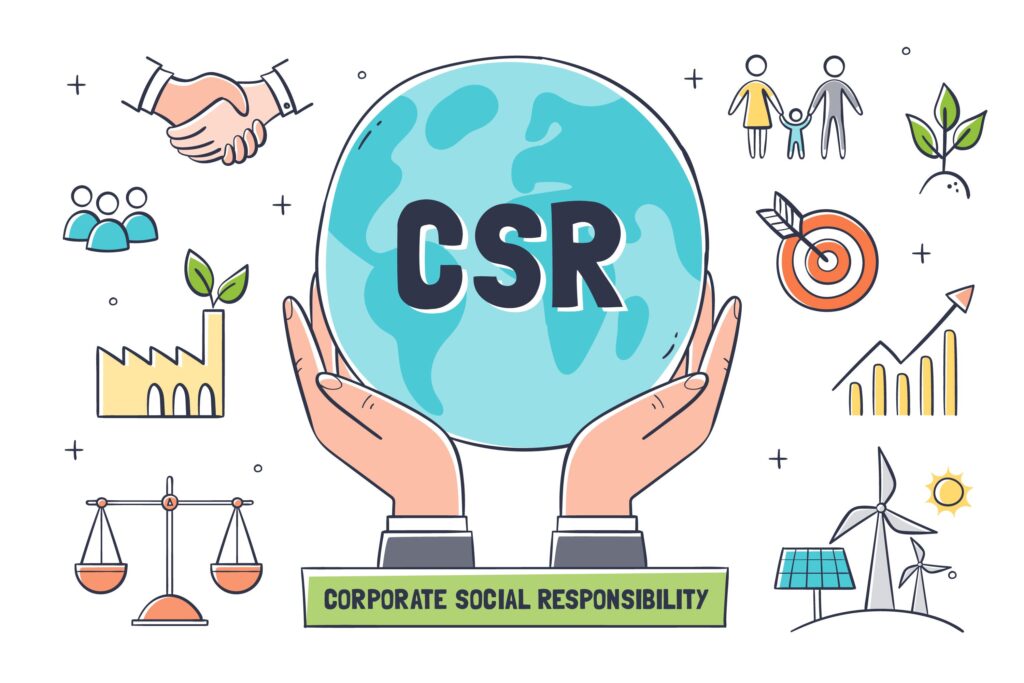
Corporate Social Responsibility (CSR) refers to a company’s commitment to operating in an ethical and sustainable manner whilst considering its impact on society, the environment, and various stakeholders beyond just maximising profits. The importance of CSR for companies stems from several key reasons:
Enhanced Reputation and Brand Image:
Engaging in CSR activities helps build a positive brand image and reputation. Companies that demonstrate social and environmental responsibility are often viewed as trustworthy and caring, which can attract customers, investors, and partners.
Stakeholder Relations:
CSR initiatives foster better relationships with stakeholders, including customers, employees, investors, suppliers, and local communities. Addressing social and environmental concerns can lead to increased loyalty and support from these groups.
Risk Management:
By proactively addressing environmental and social issues, companies can mitigate potential legal, regulatory, and reputational risks. This proactive approach helps prevent crises and costly legal battles.
Employee Engagement and Retention:
Companies that prioritise CSR tend to attract and retain top talent. Employees often feel more motivated and proud to work for an organisation that aligns with their values and contributes positively to society.
Innovation and Competitiveness:
Engaging in CSR can drive innovation by encouraging companies to develop sustainable products, processes, and technologies. This innovation can lead to a competitive advantage in the market.
Access to Capital:
Investors, including socially responsible investment funds, often prefer companies with strong CSR practices. By demonstrating commitment to sustainable practices, companies can attract a broader range of investors.
Long-Term Profitability:
CSR activities can contribute to long-term financial success. For example, energy-efficient practices reduce operational costs, while strong community relationships can lead to increased customer loyalty and sales.

Social Impact:
Companies have the resources and influence to make a positive impact on social and environmental issues. Engaging in CSR allows them to contribute to the well-being of communities and address global challenges.
Regulatory Compliance:
Many industries face increasing regulations related to environmental and social issues. Embracing CSR helps companies stay ahead of regulatory changes and comply with evolving standards.
Ethical Responsibility:
Companies have a moral obligation to operate in a way that considers the welfare of society and the environment. Demonstrating ethical behavior through CSR initiatives is an essential aspect of responsible corporate citizenship.
In summary, CSR is crucial for companies because it aligns business practices with societal and environmental concerns, leading to improved reputation, stakeholder relations, risk management, employee engagement, innovation, and long-term profitability. By addressing ethical responsibilities and contributing to positive change, companies can create a sustainable and inclusive business environment.
Related Posts

The Venue Looked Perfect Online, So Why Didn’t It Work on the Day?
We’ve all done it. Spotted a venue online, looked through the photographs and thought, “That’s exactly what we’re looking for.” The rooms are beautifully styled, the location is convenient, the capacity…

BAM Victoria: The Office Christmas Party Gets a Microphone
Every office has someone who knows all the words to ABBA. BAM Victoria gives them somewhere to prove it. For a Christmas party with more personality than any other, this…

Your Event Has Outgrown the Office. What Happens Next?
You have to borrow chairs from another floor. The meeting room is too warm, the people at the back can’t see the screen and lunch is being laid out beside…

The Death of the Boring Conference: What Delegates Expect in 2027
There was a time when organising a corporate conference meant finding a hotel with a large enough meeting room, putting rows of chairs in front of a stage and making…