
Best Brand Event Venues: A Guide for Marketing Teams
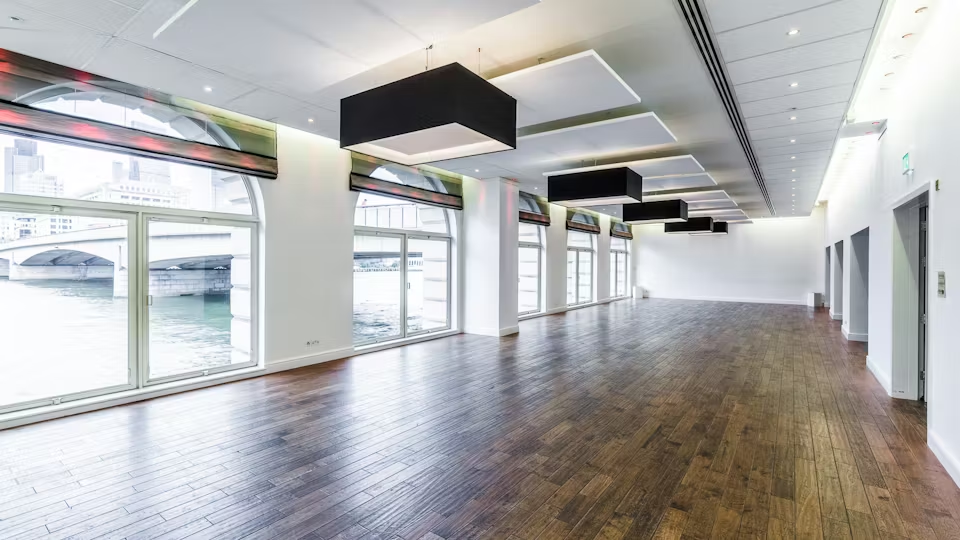
In a crowded marketplace, brand events have become one of the most effective ways for businesses to create meaningful engagement, generate buzz and leave a lasting impression on their target audience. Whether you’re launching a new product, hosting a media event, running an experiential activation or entertaining clients, the venue you choose can significantly influence the success of the campaign.
For marketing teams, venue sourcing is about far more than finding a space that looks good. The right venue needs to support your brand story, deliver the right guest experience and work practically behind the scenes to ensure flawless execution.
At Function Fixers, we work with marketing teams to source venues that not only meet logistical requirements but actively enhance campaign impact. Here’s what to look for when choosing the ideal brand event venue.
1. A Venue That Aligns with Your Brand Identity
The venue should feel like a natural extension of your brand.
A luxury brand may require a sophisticated private members’ club, boutique hotel or exclusive rooftop space, while a disruptive tech brand may be better suited to an industrial warehouse, immersive event space or creative East London venue.
Ask yourself:
- Does the venue reflect our brand personality?
- Will guests immediately understand the tone of the event?
- Does the setting enhance our campaign messaging?
The most memorable brand events feel cohesive from invitation through to guest experience, and venue selection plays a major role in that.
2. Strong Visual Impact
Marketing events need visual appeal.
Whether your guests are media contacts, influencers, clients or internal stakeholders, the venue should provide a strong backdrop for photography, filming and social content creation.
Look for:
- Statement interiors
- Architectural character
- Natural light
- Rooftop views
- Branded installation opportunities
- Attractive arrival experience
- Instagram-worthy moments
A visually striking venue can amplify post-event content and increase organic social reach.
3. Flexible Branding Opportunities
Not every beautiful venue is practical for brand events.
Marketing teams often need to transform spaces with bespoke branding, staging, product displays, experiential installations or digital activations.
Important considerations include:
- Can signage be installed?
- Are vinyl applications permitted?
- Can walls or screens be branded?
- Is custom lighting allowed?
- Can experiential builds be accommodated?
- Are product showcases practical?
A venue with restrictive branding rules can limit campaign creativity.
4. Guest Journey and Experience
Marketing teams should think beyond the event room itself.
The guest experience begins the moment attendees arrive.
Consider:
- First impressions at arrival
- Registration flow
- Wayfinding
- Reception and welcome areas
- Networking spaces
- Restroom quality
- Coat check facilities
- Accessibility
A poorly considered guest journey can undermine even the strongest event concept.
For experiential campaigns, movement through the venue should feel intentional and immersive.
5. Excellent Location and Accessibility
Convenience matters.
Even the most impressive venue can lose impact if it’s difficult to reach.
For media launches, influencer events or high-profile client gatherings, central locations with strong transport links tend to drive stronger attendance.
Marketing teams should assess:
- Proximity to major transport hubs
- Parking options
- Hotel access for overnight guests
- Ease for suppliers and production teams
- Accessibility requirements
London venues often remain popular for brand activations due to accessibility and audience concentration, but regional venues can work equally well when aligned with campaign goals.
6. Technical Capabilities
Brand events often involve significant production requirements.
Before shortlisting a venue, confirm whether it can support your event’s technical needs.
This may include:
- AV infrastructure
- LED screens
- Projection mapping
- Lighting rigs
- Sound systems
- Live streaming capability
- Fast Wi-Fi
- Power access for installations
- Hybrid event functionality
Creative event concepts can quickly become expensive if the venue lacks in-house infrastructure and extensive external production is required.
7. Space That Works for Your Format
The venue layout must support the event objective.
Different marketing events require different environments.
Examples:
Product launches:
Flexible showcase space, stage areas, media interview zones.
Experiential activations:
Open layouts, immersive build capability, audience flow management.
Networking events:
Informal lounge areas, bars, social interaction spaces.
Press events:
Presentation areas, breakout interview spaces, media-friendly logistics.
VIP client events:
Private dining, premium hospitality, exclusivity.
A venue that looks impressive but doesn’t function operationally will create avoidable challenges.
8. Supplier Access and Production Practicalities
Behind every polished brand event is significant operational planning.
Marketing teams should always check:
- Load-in access
- Delivery restrictions
- Set-up timings
- Ceiling height limitations
- Rigging permissions
- Freight lift access
- Storage availability
- External supplier policies
A venue may appear ideal on paper but become impractical for event build requirements.
9. Catering That Matches the Brand Experience
Food and drink form a major part of guest perception.
For premium or hospitality-led brand events, catering quality matters enormously.
Consider:
- Bespoke menu flexibility
- Cocktail service
- Branded food experiences
- Dietary inclusivity
- Presentation quality
- Speed of service
For some campaigns, catering becomes part of the storytelling itself.
10. Exclusivity and Privacy
For launches, confidential previews or VIP events, privacy may be essential.
Questions to ask:
- Is exclusive hire available?
- Will other events be taking place simultaneously?
- Can guest access be controlled?
- Are there private entrances?
Brand integrity can be compromised if the environment feels crowded or lacks control.
11. A Venue Team That Understands Brand Events
Not all venues understand the pace and complexity of marketing-led events.
Brand activations often require:
- Fast turnaround
- Last-minute changes
- Complex production coordination
- Detailed brand compliance
- Creative flexibility
An experienced venue events team can make a major difference to delivery success.
Why Marketing Teams Work with Function Fixers
Venue sourcing for brand events is often time-intensive, especially when balancing creative ambition with practical delivery requirements.
At Function Fixers, we help marketing teams find venues that do more than simply host an event — we source spaces that strengthen campaign objectives, elevate guest experience and simplify event planning.
From immersive experiential venues and rooftop launches to luxury hospitality spaces and large-scale activation sites, our team helps brands secure venues that align with creative vision, audience expectations and operational needs.
FAQs
What makes a good venue for a brand event?
A good brand event venue should align with your brand identity, offer strong visual appeal, support technical requirements and provide flexibility for branding and guest experience design.
What should marketing teams check before booking an event venue?
Marketing teams should review branding permissions, production access, AV capabilities, location, guest flow, catering quality and exclusivity options.
Are experiential event venues different from standard corporate venues?
Yes. Experiential venues typically offer greater flexibility for immersive builds, creative installations and audience interaction compared with traditional meeting spaces.
Should marketing teams choose exclusive-use venues?
Exclusive-use venues can be ideal for launches, VIP events and confidential previews where privacy, control and immersive guest experience matter.
Related Posts

Your Event Has Outgrown the Office. What Happens Next?
You have to borrow chairs from another floor. The meeting room is too warm, the people at the back can’t see the screen and lunch is being laid out beside…
The Death of the Boring Conference: What Delegates Expect in 2027
There was a time when organising a corporate conference meant finding a hotel with a large enough meeting room, putting rows of chairs in front of a stage and making…
Doing Circus Differently: The Story Behind Fête du Puck
Say the word “circus” to most people and they picture one of two things. Red and yellow stripes, sawdust and a ringmaster in a top hat. Or a giant arena…
Conference Venue Hire Costs UK: 2026 Pricing Guide
One of the first questions when planning a conference is inevitably: how much is the venue going to cost? In 2026, a typical UK conference venue can cost anywhere from…