
The Death of the Boring Conference: What Delegates Expect in 2027
There was a time when organising a corporate conference meant finding a hotel with a large enough meeting room, putting rows of chairs in front of a stage and making sure there was plenty of tea and coffee.
That isn’t enough anymore. As we head towards 2027, delegates are becoming much more selective about the events they attend in person. If someone is going to leave their desk, travel across London or spend a day away from home travelling to another city, they expect the experience to justify the time involved.
That doesn’t mean every conference needs a huge production budget, celebrity speaker or spectacular venue. It does mean the days of expecting people to sit in a windowless room listening to presentations for eight hours are disappearing.
The venue matters more than it used to
For years, conference venues were chosen primarily on practical considerations: capacity, location, price and availability.
Those things still matter enormously, but we’re increasingly asked to find venues with something more.
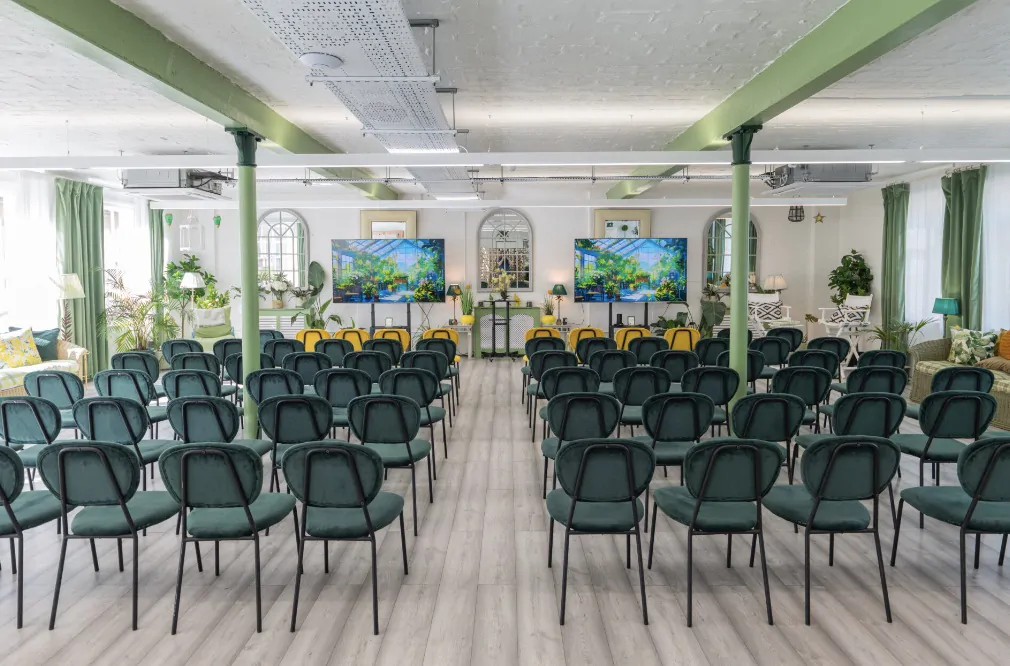
Clients want natural daylight. Interesting architecture. Better breakout areas. Outdoor space. Informal seating. Good places to network. Rooms that don’t immediately feel like traditional conference rooms.
Sometimes the request is simply for somewhere delegates haven’t been several times before.
The venue sets expectations before the first speaker even takes to the stage. Walking into an interesting space immediately makes an event feel different. This doesn’t mean traditional conference venues and hotels have had their day. Far from it. Many have invested considerably in their meeting spaces, technology, food and informal areas.
But organisers are looking more closely at how the venue will make delegates feel, rather than simply whether everybody will fit.
Nobody wants eight hours of PowerPoint
Attention spans haven’t suddenly disappeared, but expectations have changed.
A programme consisting of presentation after presentation, with two coffee breaks and lunch in between, can feel like a very long day.
We are seeing more conferences incorporating shorter sessions, panel discussions, workshops, Q&As and opportunities for delegates to participate rather than simply listen.
Breakout rooms have consequently become more important. Instead of being somewhere to hold an overflow meeting, they can become an integral part of the event. Delegates might move between workshops, join smaller discussions or choose sessions relevant to them.
That changes the venue brief too.
A room for 300 people may technically accommodate the conference, but if the programme requires six simultaneous workshops, the organiser needs much more than one large room.
Networking isn’t something that happens in the coffee queue
For many delegates, the most useful conversation of the day won’t necessarily happen on stage.
It might happen over lunch, during a breakout session or while having a coffee with someone they have just met. Conference organisers are recognising this and giving networking more space in the programme.
The venue has a big part to play. A generous foyer, lounge, terrace, café or separate networking area can work much better than asking hundreds of people to congregate outside the main conference room.
At Function Fixers we make sure to look at these areas when recommending venues. The main room may be excellent, but what happens outside it can be just as important.
Food has moved up the priority list
The standard conference lunch has improved considerably. Delegates increasingly expect good coffee, interesting food and choices that cater properly for different dietary requirements.
There is also greater awareness of how food affects the day. A heavy lunch followed by a 90-minute presentation isn’t necessarily the recipe for an attentive audience. Many organisers now favour lighter menus, street-food concepts, bowl food, food stations or menus that allow people to eat while continuing to talk and network.
If you’re holding a conference in Manchester, Birmingham, Edinburgh or Bristol, for example, there may be opportunities to bring something local into the menu rather than serving exactly the same conference lunch delegates could eat anywhere in the country.
Delegates want somewhere comfortable to spend the day
This sounds obvious, but it can easily be forgotten when comparing venues.
People may be at a conference for eight or nine hours. Are the chairs comfortable? Is there daylight? Can people easily get some fresh air? Is the temperature controllable? Are there enough toilets? Is the Wi-Fi reliable? Is there somewhere to make a phone call or answer an urgent email?
Individually, these details don’t sound particularly exciting. Collectively, they can make an enormous difference to how delegates remember an event.
The same applies to accessibility. Organisers need to think beyond whether a venue has step-free access and consider the whole delegate journey through the building.
A visually impressive venue isn’t the right venue if part of your audience can’t use it comfortably.
Technology should make the conference easier, not more complicated
Delegates now arrive expecting reliable connectivity. For organisers, the technology requirements can be considerably more involved. Large screens, live streaming, event apps, audience polling, digital Q&As, remote speakers and hybrid elements are all becoming familiar parts of conferences.
But more technology isn’t automatically better. The most successful use of technology is often the least noticeable. It works, people understand it and it supports the content rather than distracting from it.
This is why discussing AV requirements early in the venue search is so important. Finding the perfect venue and only later discovering that the production required is difficult or prohibitively expensive can create an unnecessary headache.
Sustainability is becoming part of the decision
Sustainability has moved beyond being a line at the bottom of a venue brief.
For some companies it is now an important factor in deciding where an event should take place. That can mean choosing a venue close to public transport, reducing delegate travel, using seasonal menus, avoiding unnecessary single-use materials or asking more detailed questions about a venue’s environmental policies.
Location is particularly important. A highly sustainable building that requires 500 delegates to make complicated individual journeys may not necessarily be the most sustainable choice overall.
The right answer will depend on where delegates are coming from and what the event needs to achieve.
Conferences are becoming less formal
Not every conference needs theatre-style seating.
We are seeing greater interest in venues and layouts that allow an event to change character during the day. A morning keynote might be followed by workshops, informal discussions and an evening drinks reception. Some organisers want sofas and lounge furniture alongside conventional seating. Others want cabaret tables, standing areas or spaces where delegates can move around.
This is one reason blank canvas, cultural and unusual venues can work particularly well for certain conferences. They give organisers more freedom to create something around the event rather than fitting the event into a conventional meeting-room format.
Of course, flexibility usually comes with practical considerations. Furniture, AV, catering and production may all need to be brought in, so the apparent room-hire price is only part of the cost.
The best conferences don’t need to be extravagant
Perhaps the biggest misconception is that making a conference more engaging means spending substantially more money. It doesn’t have to.
Giving people 30 minutes longer to network costs very little. Choosing a room with daylight rather than a basement can transform the atmosphere. Changing the seating layout can make a session feel completely different. A shorter presentation followed by a discussion may be more memorable than an expensive production.
The starting point should be what you want delegates to get from the day. Do they need to learn something? Meet colleagues? Generate ideas? Understand a new strategy? Build relationships? Celebrate success?
Once that is clear, it becomes much easier to decide what sort of venue and format will support it.
So, is the boring conference really dead?
Probably not completely.
There will always be conferences where the priority is getting a large number of people into one place efficiently, communicating information and keeping costs under control.
But expectations are changing. Delegates have become used to choosing how and where they work. They can watch presentations, webinars and training sessions without leaving home. If we’re asking them to travel to an event in person, there needs to be a reason for being there.
That is where the venue can make a real difference. It doesn’t have to be the newest, coolest or most unusual venue in the city. It needs to suit the audience, support the programme and provide an environment where people actually want to spend the day.
And preferably, somewhere nobody spends the afternoon staring at the clock.
If you’re planning a conference for 2027, tell us your date, location, delegate numbers, budget and what you want the event to achieve. Function Fixers can recommend conference venues across London and the UK, check availability and rates and put together a tailored shortlist.
Our venue finding service is completely free.
“Years ago, a typical conference brief would often start with ‘We need a room for 300 people’. Now the conversation is very different. Clients ask if there’s networking space, whether there’s daylight, what the breakout spaces are like and where everyone can have a drink afterwards. That tells you a lot about how conferences have changed. The main room still matters, but it’s no longer the whole event.”
Carrie Larwood, Founder, Function Fixers
Related Posts
Doing Circus Differently: The Story Behind Fête du Puck
Say the word “circus” to most people and they picture one of two things. Red and yellow stripes, sawdust and a ringmaster in a top hat. Or a giant arena…

Conference Venue Hire Costs UK: 2026 Pricing Guide
One of the first questions when planning a conference is inevitably: how much is the venue going to cost? In 2026, a typical UK conference venue can cost anywhere from…
Why Thursday is the Most Competitive Day in the Events Calendar
Ask an experienced venue finder which day of the week can be surprisingly difficult to secure and Thursday will often be near the top of the list. It makes sense…
New Manchester Venues Opening in 2027: Ones to Watch
Manchester’s venue landscape has changed enormously over the past few years, and 2027 is set to bring another interesting collection of new hotels, hospitality concepts and event spaces to the…